
The Festivals: Lights, Prosperity, Stories, and Celebration
- Supriti Parajuli
- Nov 26, 2020
- 5 min read
Updated: Aug 11, 2021
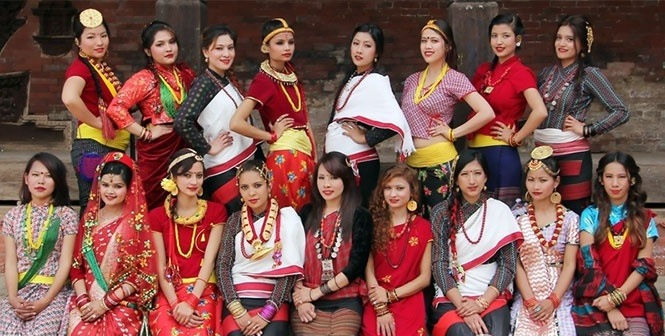
An interesting thing about Nepali Festivals is that not only do ethnic groups have their own celebrations and traditions, but most of the general festivals are celebrated by the entire country regardless of religion, gender, ethnicity, etc.
Most of the festivals celebrated in Nepal have religious connotations but some of them are also based on epic literature, mythology, and folklore. I know, super cool right?
Let's take a look at some of the major festivals and their significance:
Dashain: Starts on the 7th month of the Nepali calendar (between September and October of the Gregorian calendar) and ends on Purnima (full moon) of the same month. Similar to Navaratri (Nav/Nava - 9, ratri - night) in India, Dashain is the celebration of Goddess Durga's victory over the killing of the buffalo shape-shifting demon, Mahisashur. It is the longest festival in Nepal, 15 days, with the first 9 days holding the most importance. Ghatasthapana, Phulpati, Mahaashtami, Nawami and Vijaya Dashami are the series of the days under Dashain with each having different rituals and meanings.
Tihar: Also known as Deepawali or Diwali (in India), the festival of Tihar is a joyous one (and my personal favorite, for anyone wondering). The celebration of lights and color is mostly dedicated to the Goddess Laxmi, who symbolizes wealth, prosperity, fertility, and family (out of many other things). Unlike Dashain, Tihar is celebrated for 5 days, with each day holding a separate meaning and series of rituals. Tihar is celebrated in the Kartik month during the new moon, which is between October and November in the Gregorian calendar. The five days of Tihar in order are as follows: Kaag Tihar, Kukur Tihar, Gai Tihar & Laxmi Puja, Govardhan Puja, and Bhai Tika.
Buddha Jayanti: Jayanti means "anniversary", and in this case we are celebrating Buddha's birth anniversary. Therefore, Buddha Jayanti is literally Buddha's birthday. This holiday is actually celebrated by a lot of East Asian countries or countries where Buddhism has a strong presence. In Nepal, Buddha's birthday is celebrated on the full moon day of May. During this day, a lot of pilgrims travel to Lumbini in Nepal (Buddha's birth place) to celebrate and stay for a couple of days.
Maghe Sankranti: Celebrated during the 10th month (Magh) of the Bikram Samrat calendar, around January 14th, this festival celebrates the end to the winter solstice. The word Sankranti means "the movement of the sun from one zodiac sign into another". It is believed that any auspicious and sacred ritual can be sanctified in any Nepali family, this day on-wards. Scientifically, this day marks the beginning of warmer and longer days compared to the nights. The importance of this day has been signified in ancient epics like the Mahabharat.
Gai Jatra: This is a really interesting festival that dates back to the time of the Malla Kings. King Pratap Malla, who ruled the valley during the 17th Century, sadly lost his son. As a result, the queen fell into a depression and could not stop grieving. In an effort to see his queen happy again, King Pratap told his people that if anyone could make her smile, they would be rewarded. In order to cheer up the queen, a line of cows was brought before her. Participants began telling jokes and making fun of important figures in the community, pointing out their flaws and mocking them. Despite her sadness, the queen was happy again to see the efforts of her people. As a result, King Pratap declared that the Gai Jatra festival would be a festival for comedy and satire. Today, people put together comedic skits to broadcast on TV and in front of an audience. As the cow is the most holy of domestic animals and is believed to help the dead on their way through the afterlife, this festival also reassured the queen that her dead son was not in pain and that he was guided through to the afterlife with ease. This is one of the many reasons that cows are sacred to the people of Nepal, which is why it is illegal to kill cows and eat their meat.
Teej: Also known as Haritalika Teej, this festival is celebrated by the women all over Nepal. It lasts for 3 days and the main God of worship is Lord Shiva. It is specially significant for married women, as they get a special invitation to visit their maternal home and eat a lot of food. During one of the three days, women of all ages and groups will sit for a 24 hour fasting, where most don't even drink water. The significance of this? to ask for blessings from Lord Shiva, to attain a good husband in life, and to pray for their husband's longevity and prosperity. Sounds a little sexist, I know. Just remember that it is hard to change the roots of centuries old traditions overnight. Nowadays, many men are also fasting with their wives in order to maintain a balance in the relationship and to show that women should not have to be subject to sexist values.
Janai Purnima: A Hindu festival, celebrated all over the country, that signifies rejuvenation as Hindu men swap their old Janai (read about it here Janai: The story of ‘the sacred thread’ of some Hindu men – OnlineKhabar English News) for a new one. This is also a day to observe Shaman culture in Nepal, as the Shamans of the valley will gather to perform ancient rites and rituals; the most famous places being Kumbeshwar in Patan, Gosaikunda in Langtang and Charikot in Dolakha. The dish Kwati, a soup made out of a variety of sprouted beans, is also eaten on this day.
Krishna Janmashtami: This day celebrates the birth of Lord Krishna. Lord Krishna is the 8th avatar or ‘incarnation’ of Lord Vishnu. He was born on the eighth (Ashtami) day of the dark fortnight of the month of Bhadra (August–September in the Gregorian calendar). The number eight also symbolizes Krishna as the 8th son of his mother, Devaki.
Fagun Purnima: This is most commonly known as Holi and is also celebrated in India. It is celebrated on the full-moon day at the end of the month of Fagun, around March-April. This festival originated as a celebration of the death of the demoness, Holika. It is celebrated by throwing colored powder and water on people. It is also common for people to throw colored water on those walking down the street, so watch out if you never go to Nepal during this festival!
Mahashivratri: Maha means "great", Shiv is Lord Shiva, and ratri means "night", so Mahashivratri means "the great night of Shiva". This festival is celebrated on the 14th day of the month of Magh, and is celebrated in honor of the marriage of Shiva and Shakti. It also marks the night when Lord Shiva performed the Tandav, a really intense form of dance. There is a really cool story about the connection between Shiva and Shakti, which I will write about later on so stay tuned!
Indrajatra: An 8-day long festival, mainly celebrated in mid-September by the Newari community in Kathmandu, Indrajatra marks the beginning of a month-long festival season of autumn. The festival begins in Basantapur Square (also known as Kathmandu Durbar Square), with the pulling of a tall wooden pole made of pine in front of the old Hanuman Dhoka Palace. Hundreds of people gather at the Palace Square and its surrounding temples during the pole-raising ceremony. The chariot of the Kumari, the Living Goddess (more on her in a separate post), is taken out in a parade through the main streets of Kathmandu Valley. Masked dancers called the Lakhay dance on the streets while banging on loud drums every evening. The festival marks the time when Lord Indra, the God of the Sky and the King of all Gods in his court (kind of like Lord Zeus in Greek Mythology), came down from heaven in human form to look for an herb.


Comments